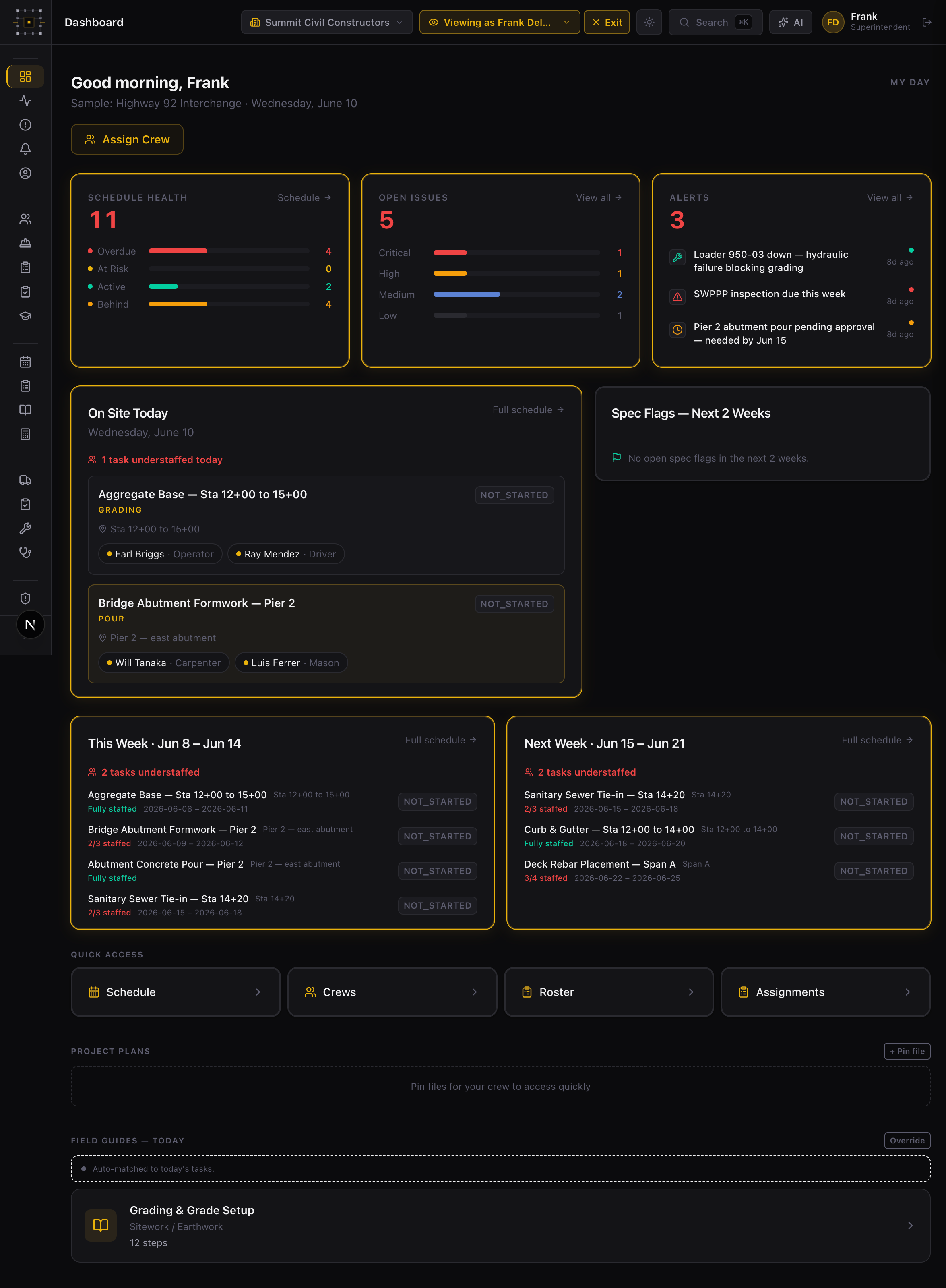
Scheduling, equipment, safety, and operations in a single role-aware system — with a native iOS app the crew actually carries. Built by people who've run the jobs, and running live on projects today.
Scheduling in one app. Maintenance on a whiteboard. Pours in a group text. Inspections on paper. The information that should connect them lives in people's heads — and walks off the job when they do.
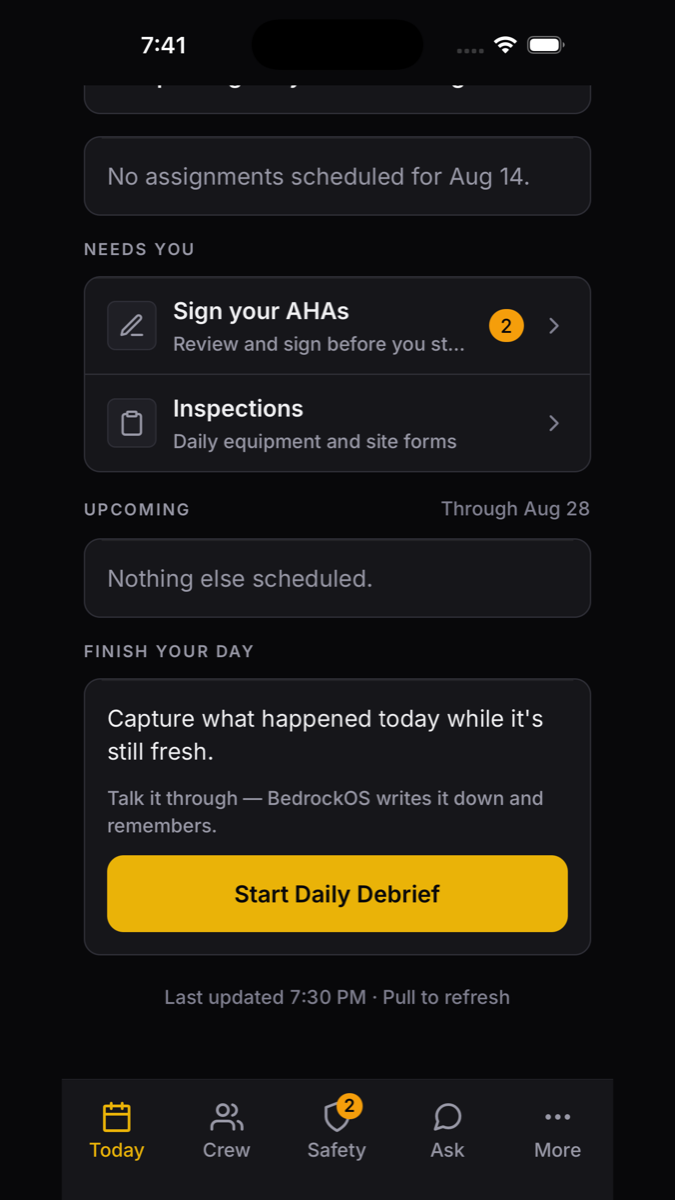
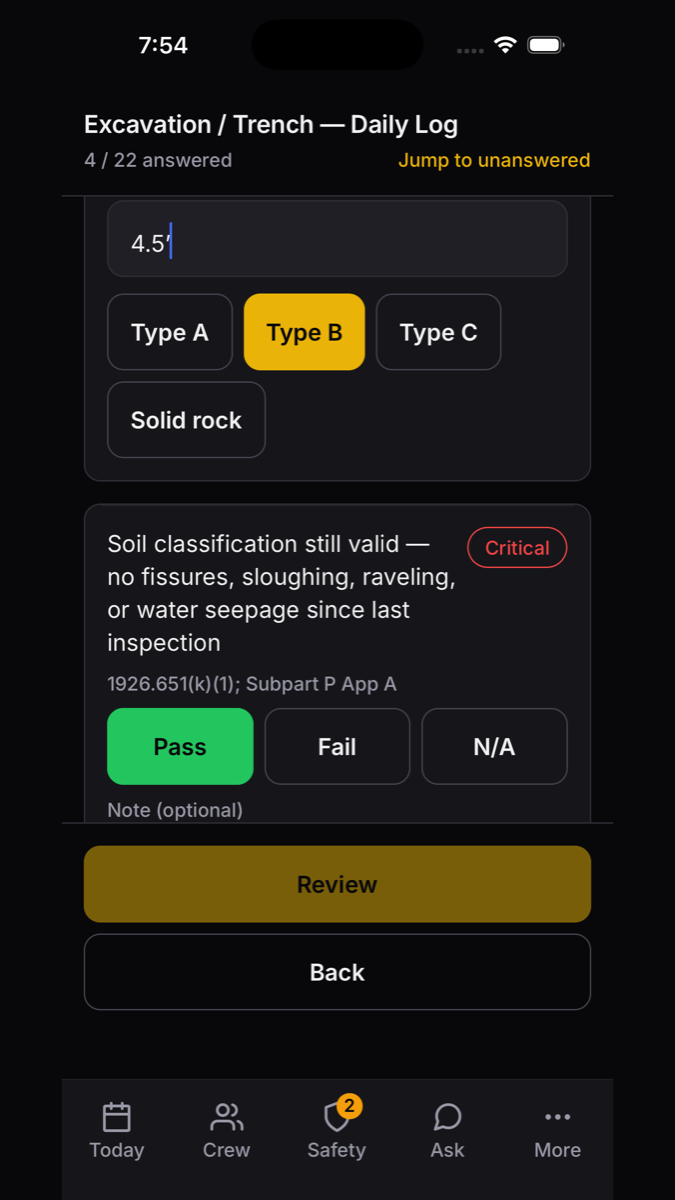
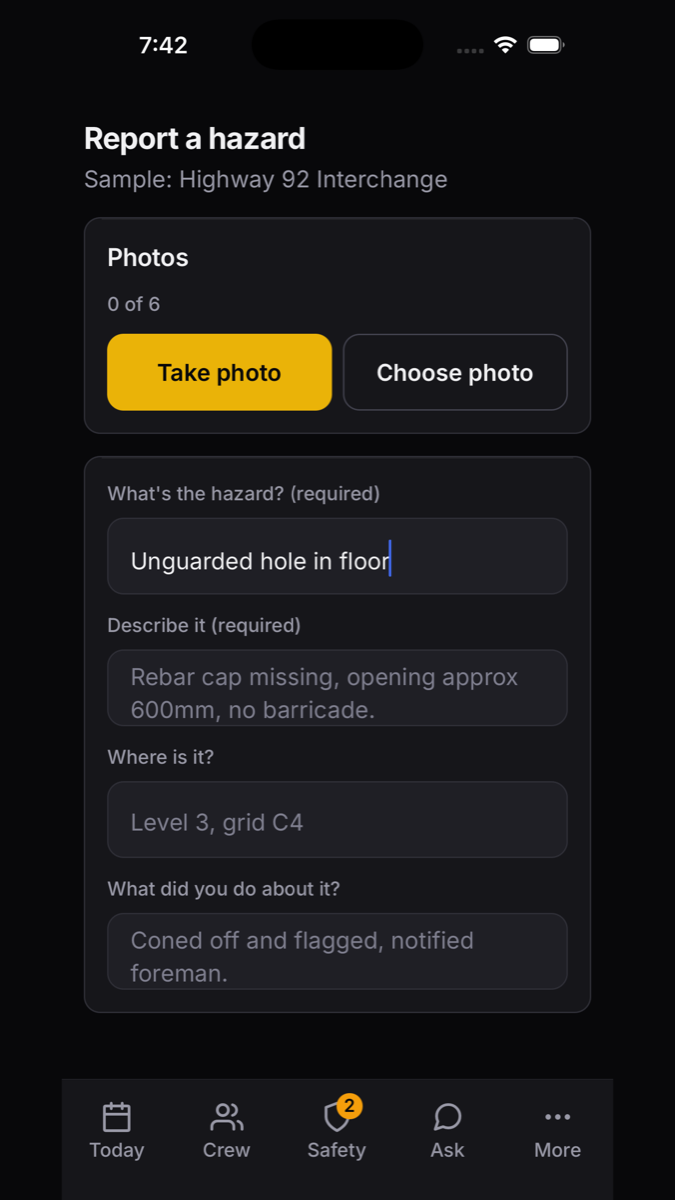
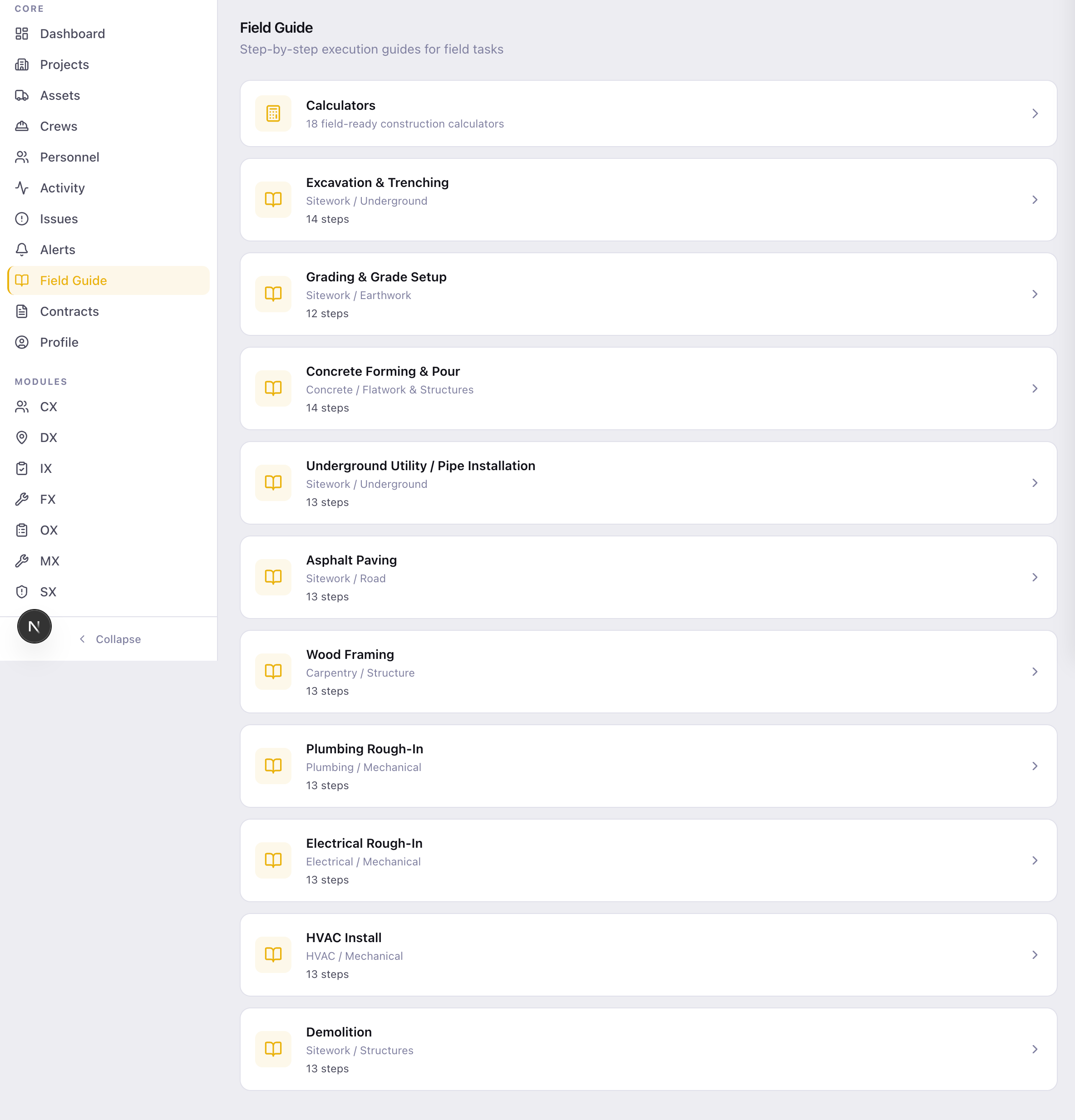
Not a shrunk-down website. A native app a foreman opens wearing gloves — one hand, at arm's length, in the sun — to run a pre-trip, report what they just found, or ask a question about the spec.


The knowledge that normally lives in one superintendent's head — why the pour moved, what the inspector said, who promised what — captured at the end of the shift by talking, and turned into structured project memory the whole team can ask questions of.


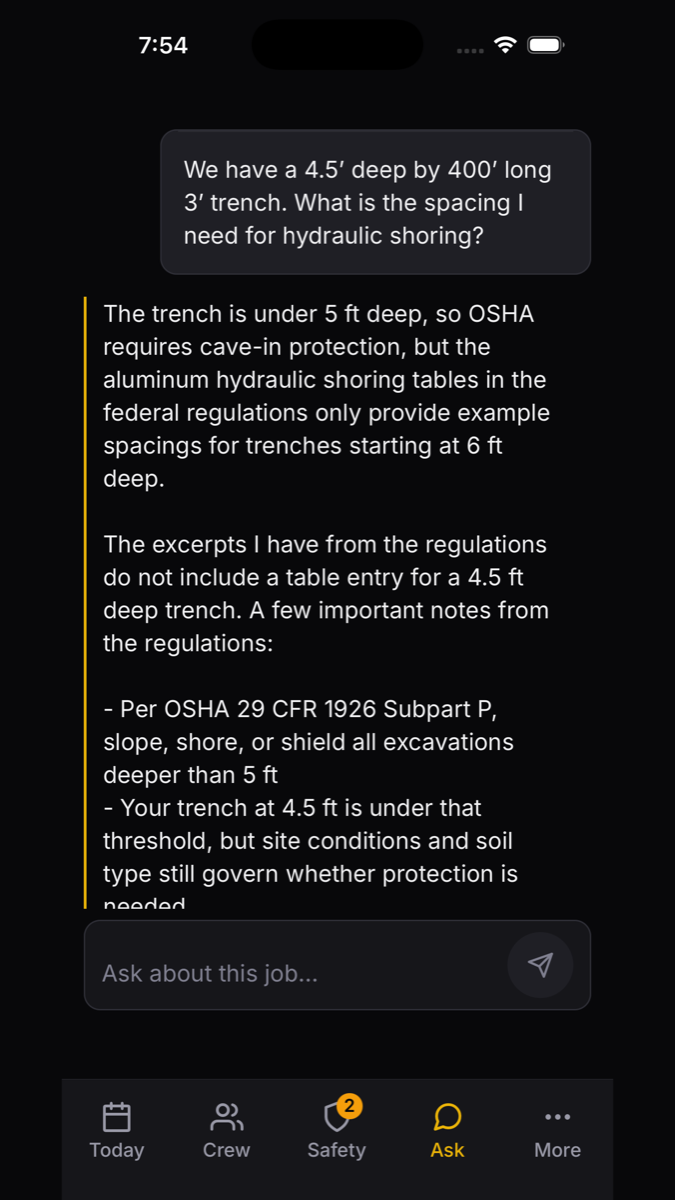
Upload the specs and the drawing set, and anyone on the project can ask questions about them — on the web or the phone. Answers name the sheet or the section a crew can verify, and the tappable source opens an image of the actual page, so nobody takes it on faith.
Everything is scoped to the project you're in and the role you hold. One company, many projects, one coherent system.
Turn on what your operation needs — each domain is built to work alone and together.
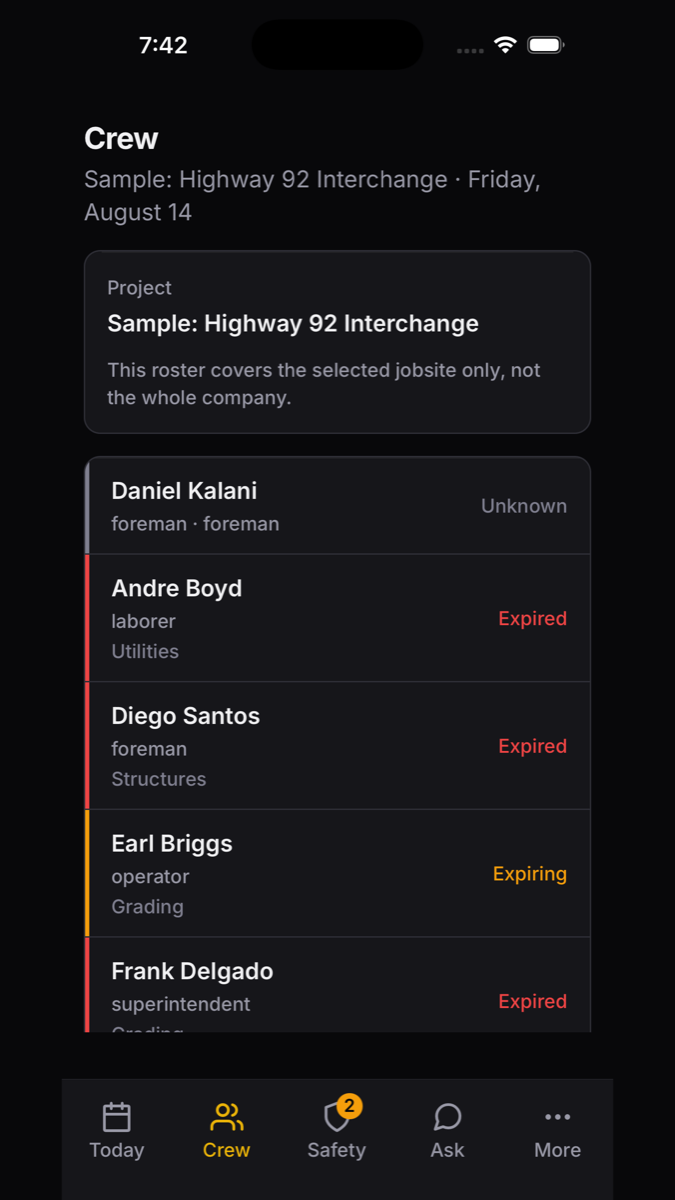
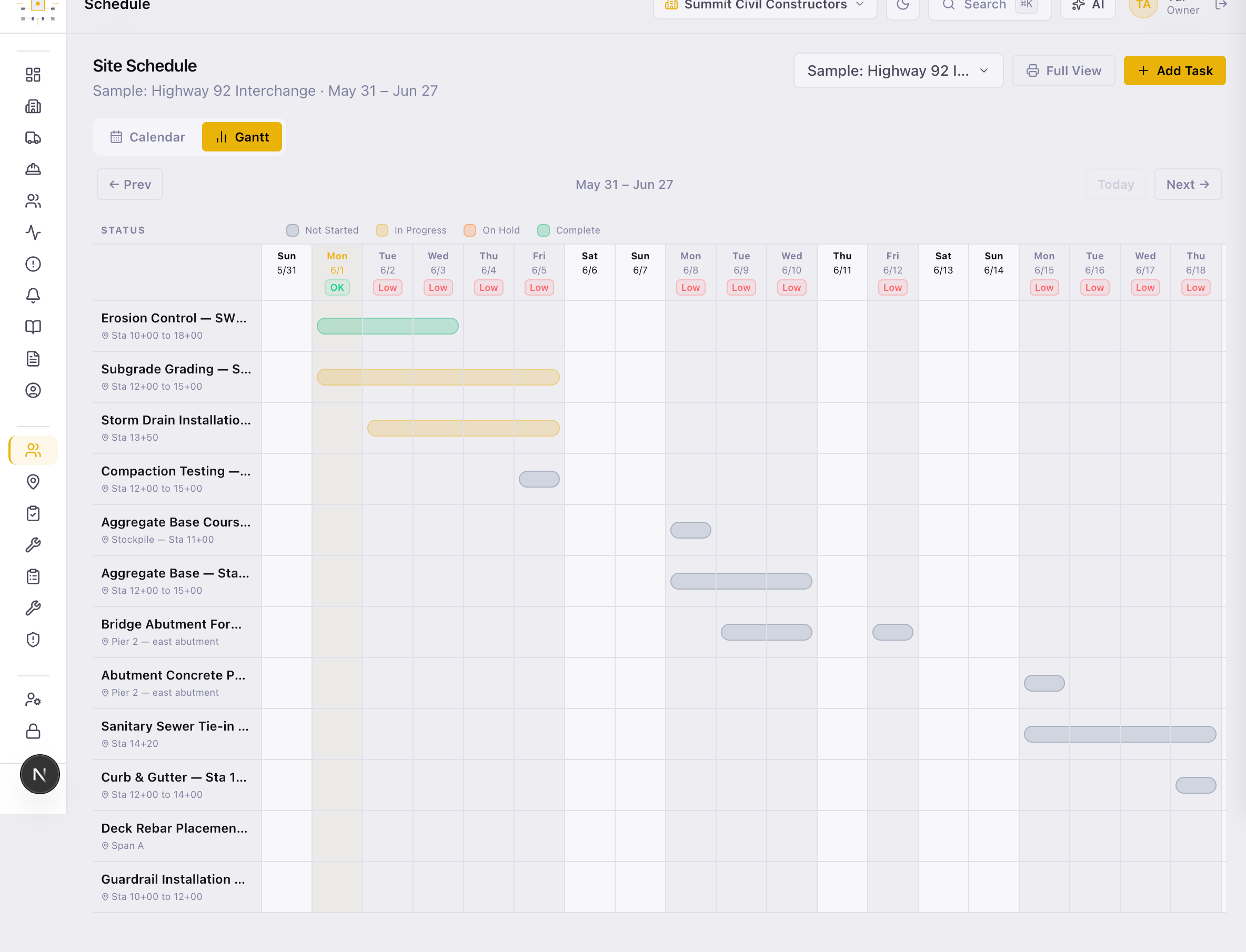
Roster the whole workforce, build named crews, and assign people across projects week by week. Run a site calendar and a scrollable Gantt, work a reusable task bank, and bulk-import tasks straight from a CSV.
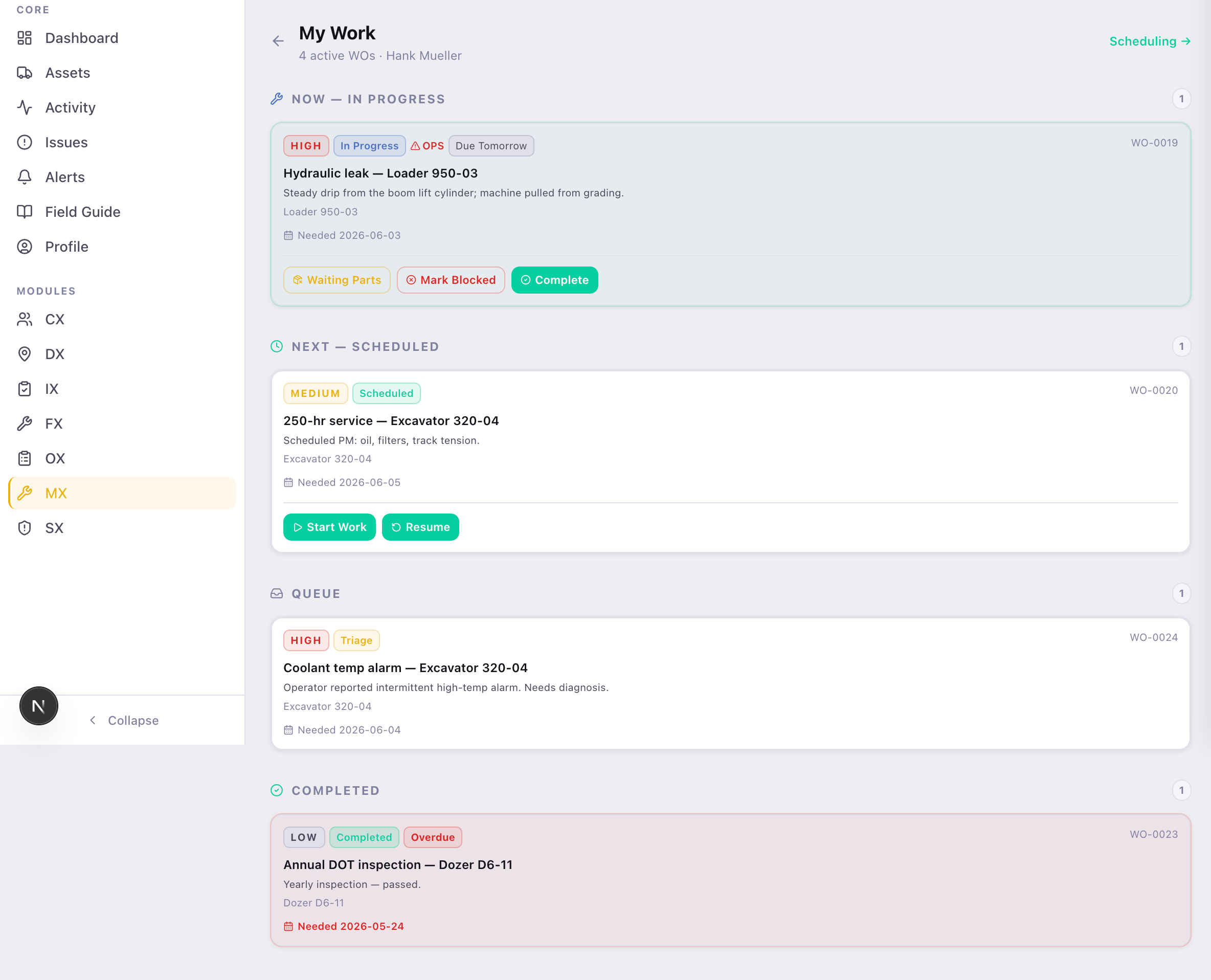
Mechanics work a personal "My Work" queue. Shop leads triage and assign work orders. Operators run the pre-trip on their phone, picking the machine out of that jobsite's fleet. And readiness doesn't sit in a silo — it feeds straight into pour planning downstream.
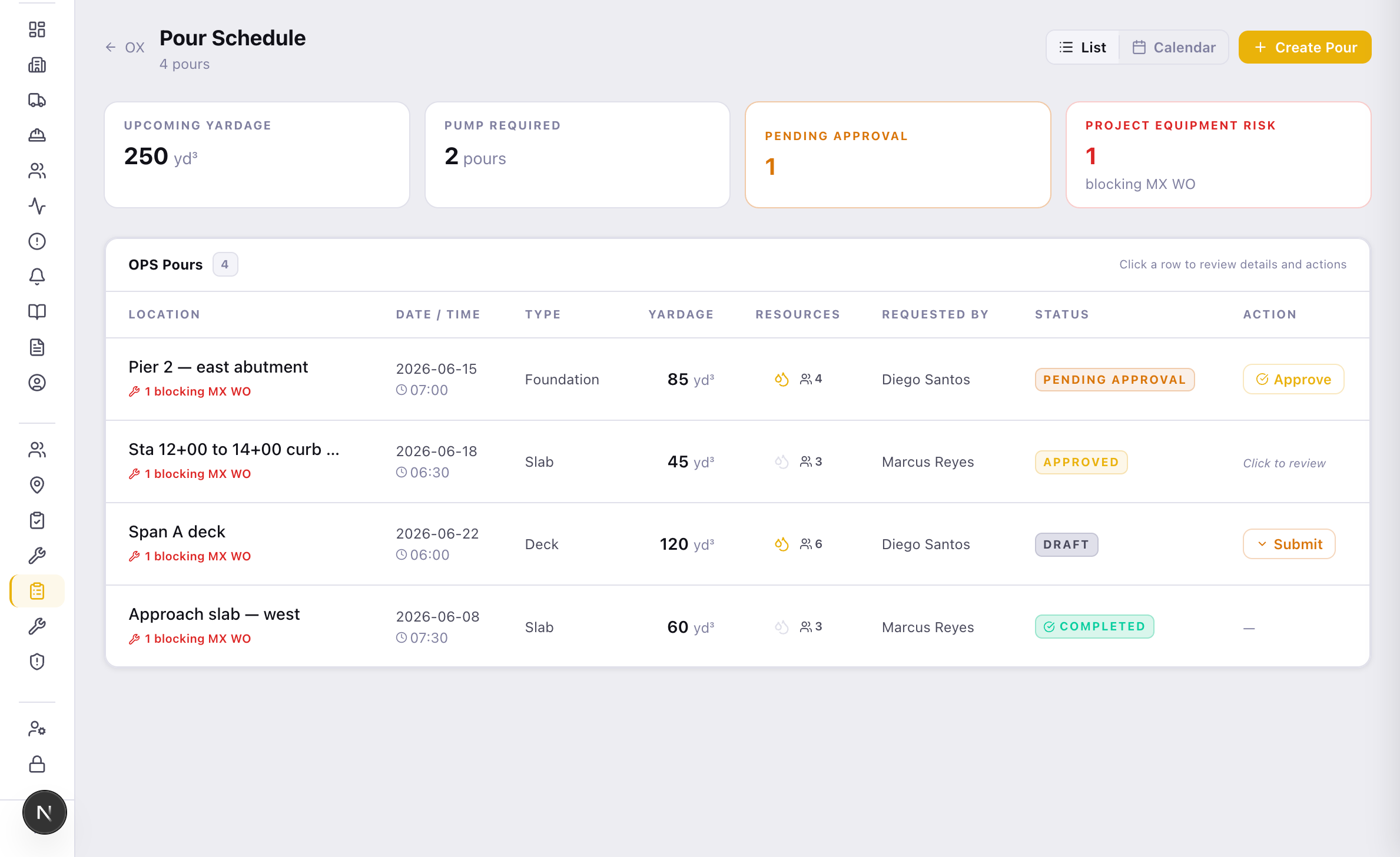
Dispatch field requests — masons, pump trucks, equipment — and coordinate company-wide concrete pours across list, calendar, and approval views. The request pulls live crew availability and spins up maintenance work orders where it needs to. Behind it sits the back office: access passes, certified payroll, contracts and POs.
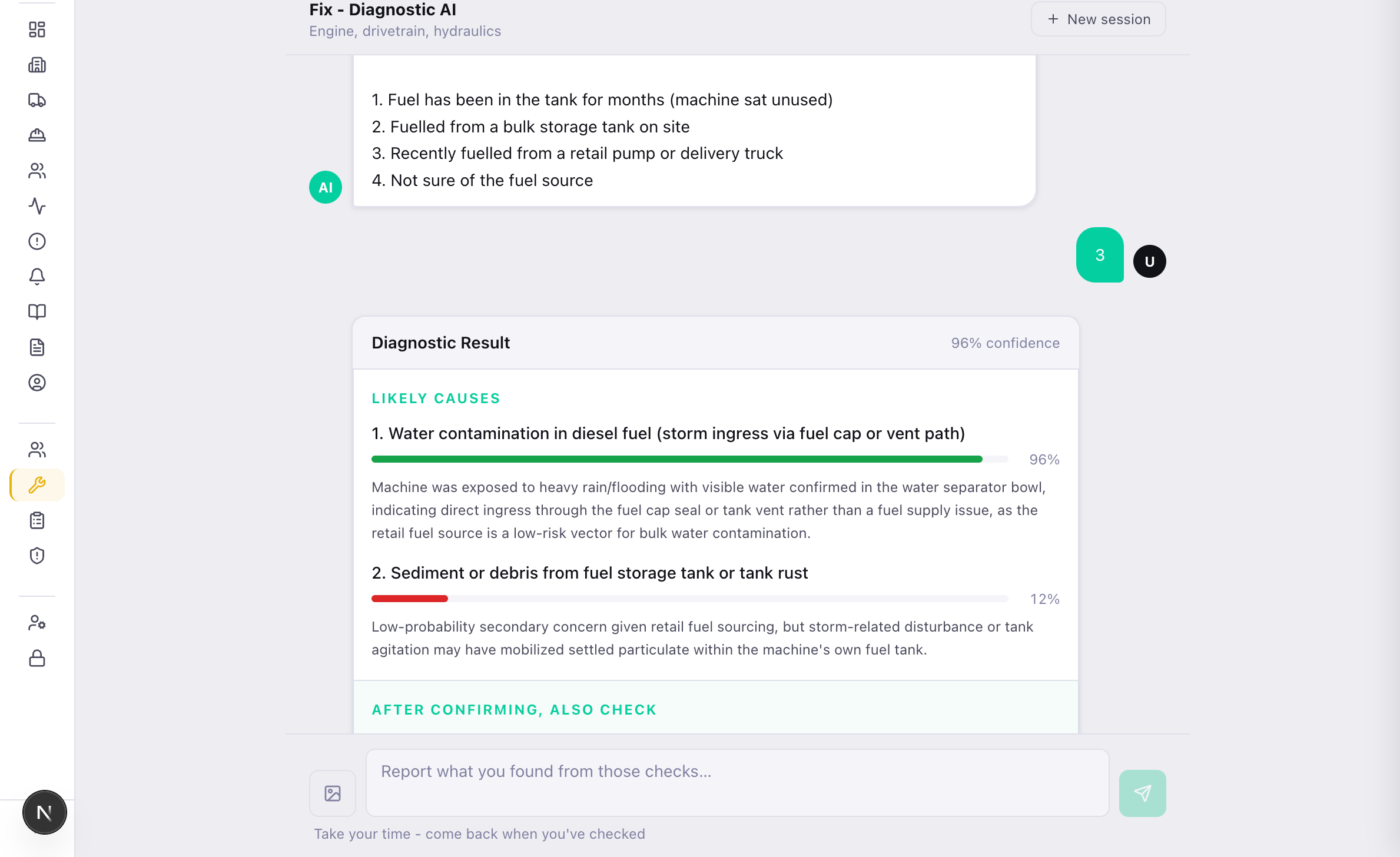
AI Mechanic is an AI diagnostic built for operators. Describe what the machine is doing — the noise, the warning light, the way it's running — and it works toward the likely cause. Plenty of issues turn out to be a quick fix the operator can handle on the spot. When it isn't, one tap escalates to the shop and opens a work order with the diagnosis already attached.
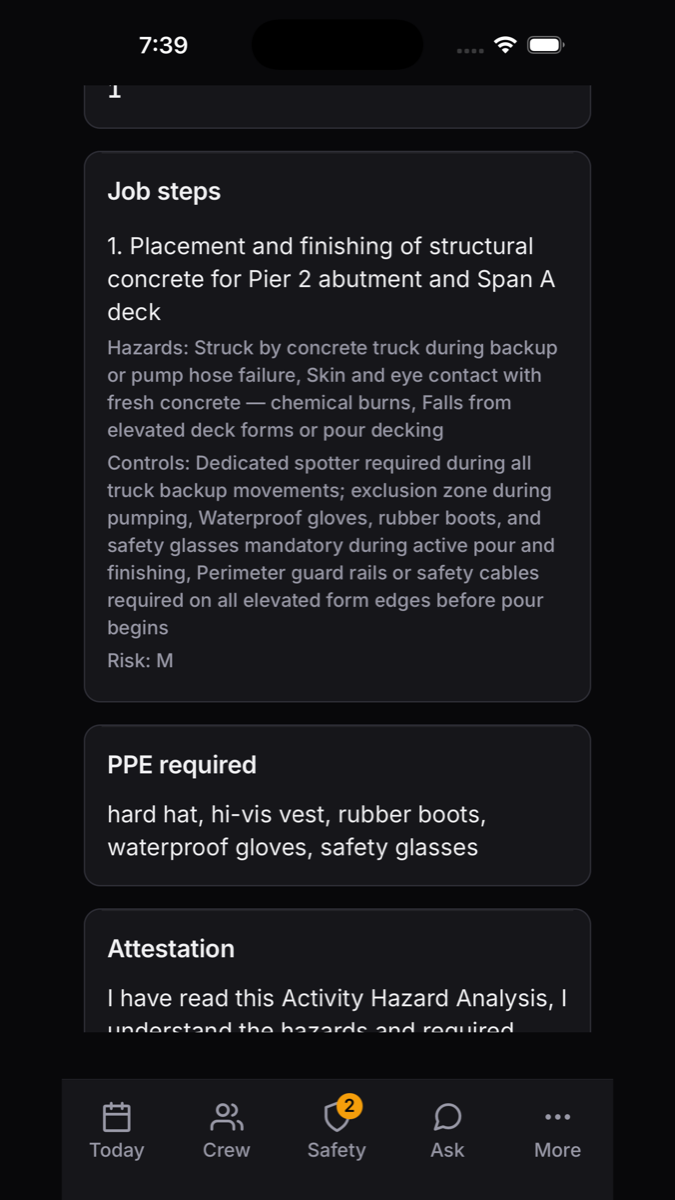
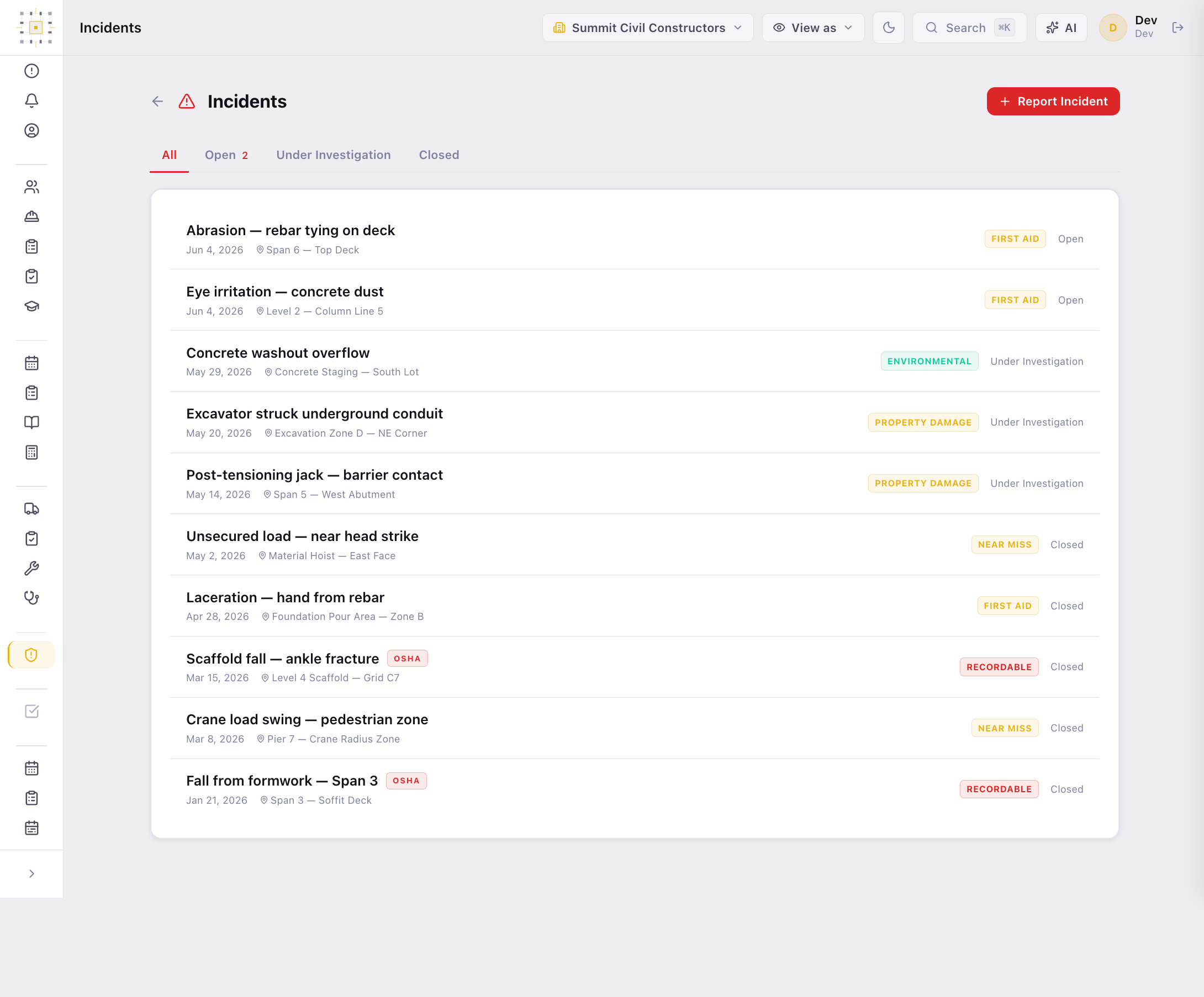
A full safety system — incident reporting, hazard and near-miss capture, activity hazard analyses, corrective actions, SDS library, and certification tracking with expiry validation. OSHA 300/301 records generate from your data with an audit trail, ready when the inspector arrives.
This is the part nobody else has. The handoffs that normally happen over text, radio, and memory happen in the system — automatically, and across the phone and the office alike.
"Single OS, not point tools" is usually marketing. Here it's true in the code — these handoffs run in production on a live job today.
Beneath the domains sits the shared shell — the coordination surface every role touches, scoped to the project they're in.
Same system, scoped to the role — fifteen of them, from owner to viewer. A PM sees contracts and the whole project; a foreman sees today's crew and tasks; a mechanic sees their work queue. Access is built in, not bolted on after.
Domains are packaged into bundles an organization turns on. Locked features are shown as locked, never quietly hidden — so nobody wonders whether the button is missing or the license is.
The field app and the assistant come with the job, not as a fifth line item — the crew's phone reaches whatever your organization has turned on.
I'm a civil superintendent with 20 years in the field. BedrockOS started because I was running jobs out of five different programs and none of them knew about each other. So we built one that did.
BedrockOS is available to license now. Tell us about your operation and we'll walk you through the system that's running ours — office shell and field app both.
iOS · your crew is invited through TestFlight when your organization is onboarded